
Skepticism + Systems + Surrender
How To Stay Sane In An Entropic Universe

Most people are trying to live inside a story the universe is constantly disproving.
Stars burn out.
Civilizations collapse.
Institutions rot.
Bodies glitch, age, and fail.
Physics has a term for this: entropy. Systems move from order to disorder. Structure dissolves. Nothing coherent lasts forever.
That’s not just a cosmology problem. It’s also a life problem.
How do you build a life, a body of work, a sense of self when you know everything you build is temporary, contingent, and mostly out of your control?
My answer is not a religion.
It’s more of an operating system: Skepticism + Systems + Surrender
Think like a postmodernist.
Plan like a modernist.
Live like a Stoic-Buddhist.
This is how I can make art, raise a kid, tend a body, and navigate living in our terrible/beautiful world without disappearing into denial or nihilism.
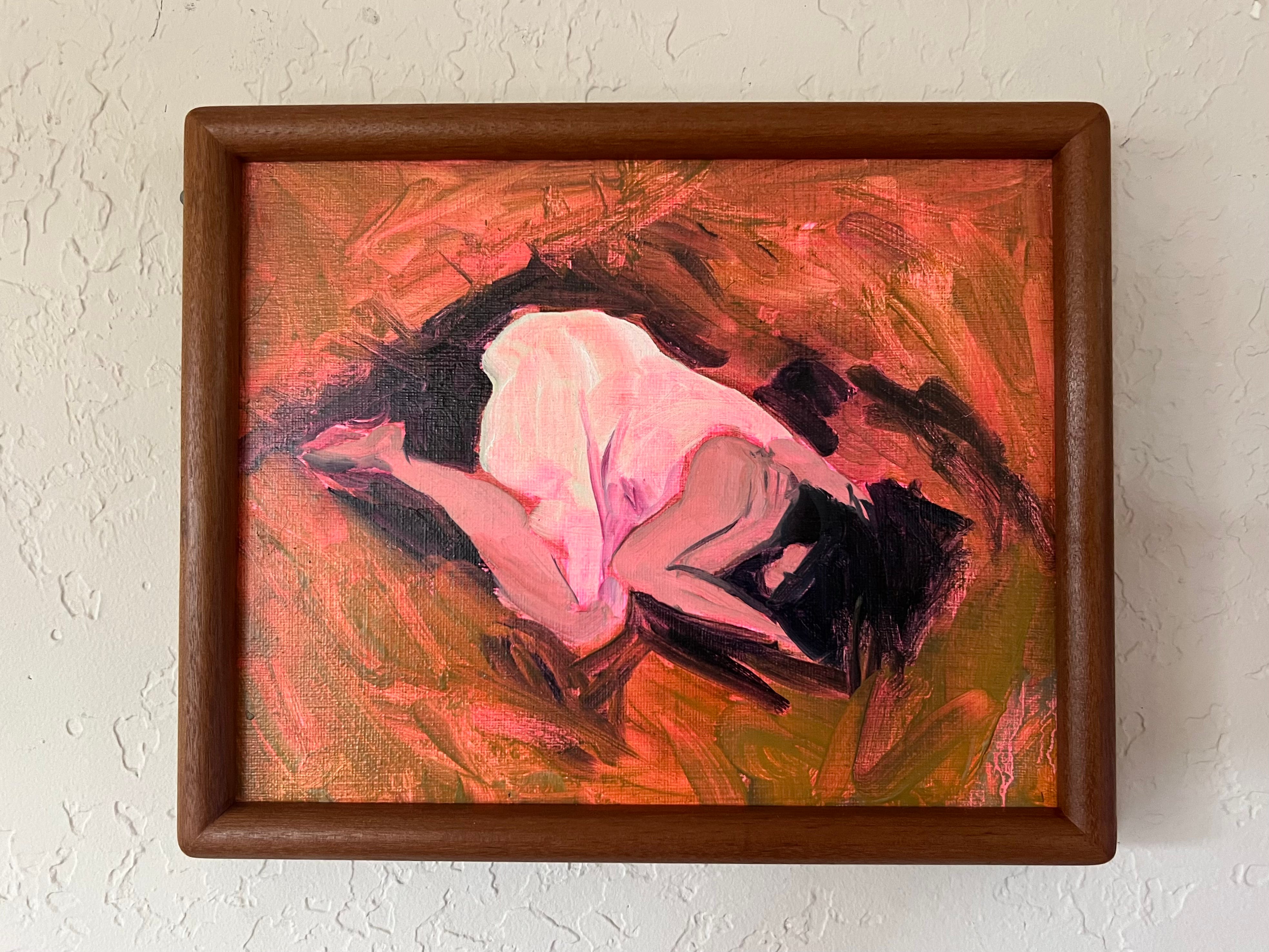
The Problem With Big Stories In A Leaky Universe
I have a PhD in sociology. I spent years studying power, systems, and institutions, then worked in ministries across sub-Saharan Africa, spending too much time in rooms where decisions in air-conditioned conference halls hit real bodies thousands of miles away.
You can’t do that work and still believe in clean, innocent narratives.
You see how “this is just the way things are” is usually code for:
A specific policy choice
A colonial hangover
A funder’s preference
Someone’s promotion or political strategy
You see how language choreographs reality: the same behavior gets framed as “community participation” in one report and “elite capture” in the next.
Zoom farther out and what I can decipher from physics doesn’t help:
The universe does not guarantee justice.
It does not guarantee coherence.
It does not guarantee a happy ending.
It pretty much only guarantees change.
So those big meta-stories we’re handed:
“Everything happens for a reason.”
“Hard work always pays off.”
“History inevitably bends toward justice.”
Start to feel less like truth and more like coping mechanisms.
But the equal and opposite reaction to think “Nothing means anything, it’s all random, why bother” actually fails on contact with your actual day.
Because:
Paintings don’t paint themselves.
Nervous systems don’t regulate themselves.
Relationships don’t deepen on autopilot.
What you do at a local scale clearly changes your local reality.
So we’re stuck between:
The universe is entropic and not invested in your personal narrative.
Your actions still matter, a lot, in the short term and in a small space.
You can’t resolve that with a single story.
You need a way of running your life that can hold both.
That’s where my take of Skepticism + Systems + Surrender came from. (I’m still working on the name, lol).
Skepticism: Think Like A Postmodernist
Skepticism, for me, is not cynicism. It’s a mental immune system. It starts from three assumptions:
I don’t trust big, totalizing stories.
Reality is messy, contingent, plural.
Every narrative that benefits someone usually erases someone or something else.
In practice, that looks like:
When I hear “this is just how it is,” a silent script runs in my head: Who decided that? When? Under what constraints? Who benefits? Who pays?
When an institution presents itself as neutral, my reflex is: Where’s the power? Who’s invisible in this frame?
When a wellness protocol, productivity system, or spiritual path promises to “fix everything,” I treat it as a red flag, not a solution.
Skepticism reminds me:
The stories we tell about “success,” “discipline,” “good art,” or “the good life” are historical artifacts, not laws of nature.
My own perspective is always partial—shaped by my body, class, geography, the salaries I’ve earned, the people around me, the passport I’ve carried, and the books on my shelves.
It lets me say the quiet part out loud: “I don’t know if there’s a grand meaning here. Reality is weirder and more fractured than any theory.”
But if I stop at skepticism, I get stuck in a type of paralysis.
That’s where the second piece comes in.
Systems: Plan Like A Modernist
Here’s the paradox:
Mentally, I do not believe in progress narratives.
Practically, I run my life like progress is possible.
That’s Systems.
I spent overlapping years in grad school as a GTD nerd—weekly reviews, color-coded lists, project dashboards. Then I worked inside organizations with even more structure: project timelines, monitoring and evaluation frameworks, budgets with consequences.
You learn quickly:
It’s not willpower.
It’s not “motivation.”
It’s systems.
When I moved into painting and building an art business, I realized my nervous system still responds best to simple, evidence-informed structure:
If I sleep 8–9 hours, walk and hike regularly, lift a few times a week, and actually eat real meals with a lot of protein, I feel good.
If I show up to the easel, even when I don’t feel inspired, flow shows up more often than not, after the first awkward 20 minutes.
If I track my work carefully, photograph it well, and plan, I sell more paintings with less chaos.
I’m not dogmatic about following any specific protocols, but I do pay attention to the research that people like Huberman and others are surfacing about sleep, nervous system regulation, light exposure, movement, and psychological wellbeing. Not because I think science is infallible, but because it’s the best tool we have for testing what tends to work across many bodies over time.
You don’t need a cosmic story for any of this. You just need to accept a basic rule: Small, repeatable actions shift probabilities in small parts of your life.
“Systems” for me means:
Concrete plans: scheduled painting time, show timelines, admin blocks
Nervous-system support: morning light, caffeine timing, breaks that are actually breaks, not micro-dissociation via Instagram
Treating art as both portal and process: I can be mystical on the canvas and ruthlessly practical about:
photographing pieces
writing descriptions
posting
sending invoices
paying sales tax on time
This is my inner modernist: the part of me that believes controlled experiments and consistent inputs can move reality a few inches at a time.
So now we have the paradox in full:
In my head: I know my entire life is a small island in an ocean of entropy.
In my calendar: I behave like Tuesday’s work will stack on Monday’s.
The only way that tension is livable is with the third part.
Surrender: Live Like A Stoic-Buddhist
Surrender is how I metabolize the fact that everything I love is temporary.
From Stoicism, I take things like:
The distinction between what I control (my actions, my effort, the alignment between my values and the way I live) and what I don’t (pretty much everything else in the world— other people, pandemics, politics, the economy, the weather, aging, death, everything)
Amor fati: love of one’s fate. Not romanticizing harm, but refusing to argue with the fact that what has happened has happened.
A commitment to show up well regardless of the outcome.
From Buddhism, I take:
Impermanence as non-negotiable: sensations, moods, relationships, identities—everything is in motion.
Non-attachment: care fully, but don’t pretend you can hold anything still.
Self as process, not object: “me” is a moving pattern, not a solid thing.
Surrender does not mean:
Apathy
Passivity
“The universe will handle it” delusion
It means: I will show up. I will run my systems. I will pour myself into the work. And then I will consciously release my grip on the outcome.
In practice:
I can prepare meticulously for an Open Studio and still accept that some days are quiet and some are slammed for reasons I will never understand.
I can do all the things that support my health and still know that illness, injury, and randomness are part of being a mammal and alive.
I can love people deeply without pretending that love protects any of us from distance, change, or death.
Surrender is the daily whisper:
This painting, this season, this version of me in Point Reyes is a sandcastle.
The goal isn’t to freeze it.
The goal is to meet it honestly while it’s here.
How Skepticism + Systems + Surrender Actually Looks On A Random Wednesday
This isn’t abstract. I actually try (and try again) to live like this. Here’s today:
Morning (Systems)
I wake up.
I get outside and let light hit my eyes. I try to make sunrise in the winter, but never in the summer.
I make coffee.
I fill out my daily planner sheet which includes my awe + gratitude practice.
None of this is glamorous. It’s just protocol so I don’t have to reinvent “how to start a day” every 24 hours.
Input (Skepticism)
I don’t doomscroll. I read only longform journalism. If an article takes under 10 minutes to read, I skip it. I find I don’t miss much of actual importance and doing this means that my nervous system is not flooded with shock and awe without context.
Even then, I read with positionality in mind: Who is the author? The publication? The funding? The ideology?
Skepticism keeps my nervous system from being yanked around by every headline.
Work (Systems again)
I carve out specific blocks for painting—early morning or evening.
I paint even when I don’t feel like it. Inspiration is allowed to be late.
I use checklists for:
Packing work
All of the stages of a painting’s life, from start to sale
Restocking postcards, coasters, keychains
Outside & Family (Surrender)
I spend time outside with my son and dog.
No productivity angle. No “content.” Just presence. Just this version of this day.
Meaning (Skepticism + Surrender)
Skepticism keeps me from turning my art into a god.
I love it. I take it seriously.
But I know it is still a sandcastle on a very big, very impersonal beach.
Outcomes (Surrender)
A piece sells, or it doesn’t.
An Instagram post resonates, or it flops.
A plan unfolds cleanly, or derails completely.
My questions at the end of the day are:
Did I show up?
Did I act in alignment with my values?
Did I run the systems I know support me?
If yes, I practice letting the rest go.
Why This Might Matter To You
You don’t need my specific biography to feel this tension:
You’re too informed to believe the old clean stories.
You’re too alive to pretend nothing matters.
You’re too tired to live in existential crisis 24/7.
That in-between is where most of us actually live.
Skepticism + Systems + Surrender isn’t a doctrine. It’s a simple, portable mental model you can try on:
Skepticism to keep your mind honest.
To resist being captured by any one narrative that promises to explain everything.Systems to move real things in your real life.
Your body. Your work. Your relationships. Inch by inch. Day by day.Surrender to metabolize everything you can’t control.
To practice accepting impermanence without going numb.
See clearly.
Build deliberately.
Let go.
It’s not a grand meta-narrative. It’s a way of walking through an entropic universe with your eyes open, your hands busy, and your heart soft enough to feel it all as it passes. And gosh, isn’t it magical?